The AI program is going well. Reports are faster, forecasts land on time, the backlog is shrinking.
Then the tool gets something badly wrong. The people who used to do that work by hand aren't as sharp as they were. And the executives who signed it off can't explain how the decision is made.
Nobody noticed it happening. That's the problem.
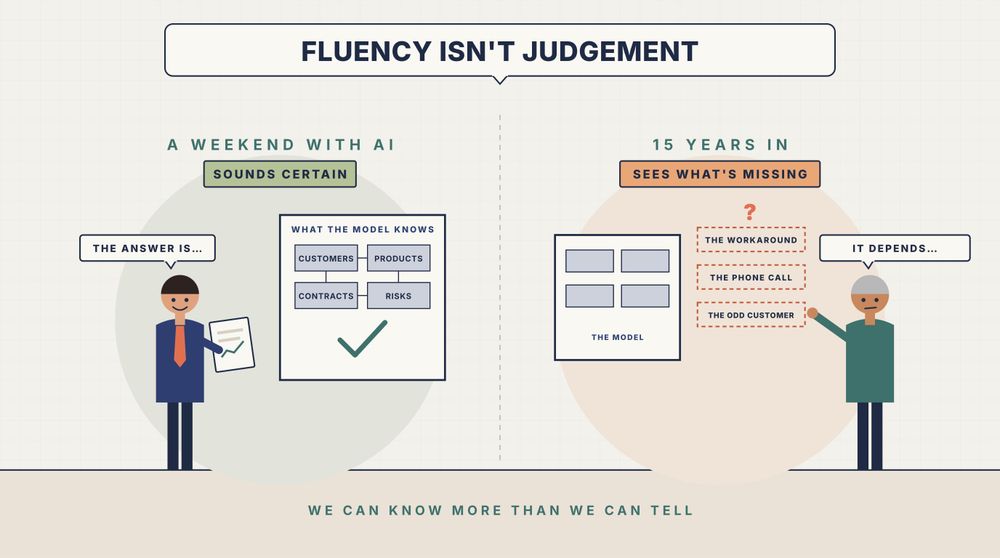
In 1983 Lisanne Bainbridge, a psychologist at University College London, published a five-page paper called "Ironies of Automation". Automate most of a job and people stop practising the skills the job used to give them. Yet you still expect them to step in when the automation fails. So you need people at their sharpest exactly when they're rustiest. The more advanced the system, the more the human matters.
Four decades on, the evidence keeps lining up.
In 2013 the US Federal Aviation Administration issued a safety notice, SAFO 13002, encouraging airlines to have pilots fly by hand more often. It had found an increase in manual handling errors.
A 2025 study in The Lancet Gastroenterology & Hepatology followed endoscopists at four Polish centres after AI was introduced to spot pre-cancerous growths. Working without the AI, their detection rate fell from 28.4% to 22.4% within about three months. It's observational, but these were experienced specialists.
Closer to home, Australia has already run this experiment at scale. Robodebt. From 2015 to 2019 the Commonwealth averaged annual tax office income across fortnights, compared it with what welfare recipients had declared, and raised debts on the difference. Hundreds of thousands were caught up. The Royal Commission found the process had been fully automated, removing humans from the loop, and that this was a key factor in the harm. Commissioner Catherine Holmes called it "a crude and cruel mechanism, neither fair nor legal". The settlements now run into the billions.
Robodebt wasn't only frontline atrophy. It was executive atrophy. The judgement that should have asked "is this lawful, is this fair, does this number make sense?" had drifted away from the people accountable for the answer.
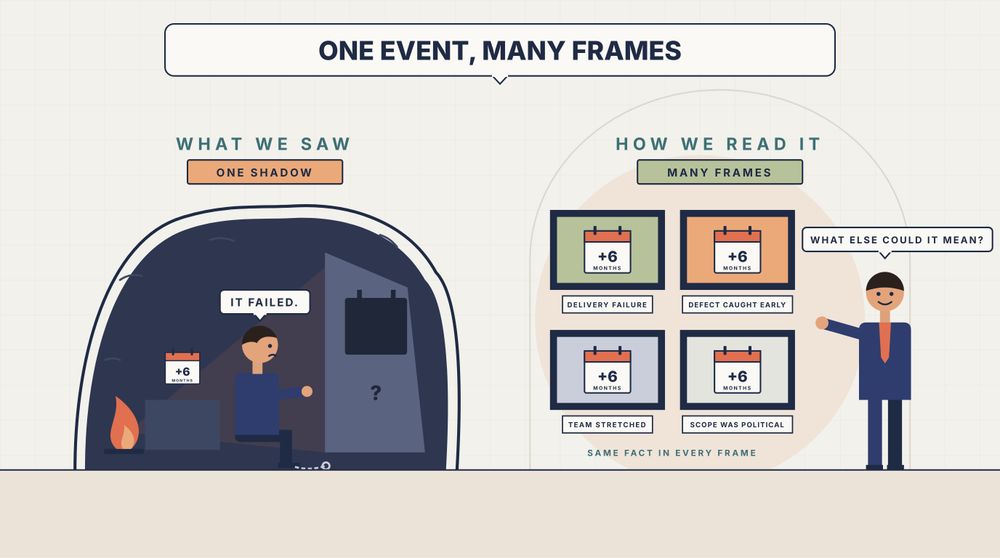
That's cognitive atrophy: a slow fade in judgement nobody's measuring, at the front line or the top table.
Three things executive teams can do.
Know what you're quietly giving up. Before automating a process, name the judgement it used to build: spotting an odd number, reading a difficult case, sensing when a forecast smells wrong. Put that on the risk register as a dependency. If leadership can't see it, it doesn't know where it stands.
Plan for the day the tool isn't there. What happens if it fails, gets withdrawn, changes price, or is wrong in a new way? Who can still do the work, and how fast? Test that against more than one future, not just the vendor's demo.
Keep people flying by hand, including yourselves. Rotate staff through key tasks without the tool. Make "show me how you checked it" a normal question in executive meetings. Treat human judgement as a capability you build and maintain deliberately, with a named owner for every automated decision and clear criteria for checking it's still there.
There's an ethical side too. The cost of rusty judgement rarely lands on whoever approved the rollout. It lands on the patient, the customer, the welfare recipient, the junior analyst blamed for an error nobody was equipped to catch. And if juniors never do the work by hand, where will your future executives learn the business?
A simple test for your next leadership meeting: pick one decision your organisation automated in the last two years. If the tool switched off tomorrow, who could still make that decision well, and when did they last try?
Two questions I'd love your take on:
Where has automation made your organisation faster but quietly less sure of its own judgement?
Which skill would your executive team most regret losing, and is anyone still practising it?
#Automation #AIGovernance #CognitiveAtrophy #Robodebt #DecisionMaking #CapabilityBasedPlanning #StrategicForesight #Governance #BusinessEthics #Leadership
A note on this article: Robodebt is a central motivation for my research. It remains one of Australia's clearest examples of automated decisions outpacing the human judgement and governance meant to oversee them, and of how long the people affected carry the cost.