Here's a restructure I've seen play out, in one form or another, more than once.
A large operations group is split in two. The logic is sound on paper: sharper focus, clearer accountability, smaller teams that can move faster. Each new division gets its own leader, its own budget and its own scorecard.
Six months later, both divisions are hitting their numbers. And yet customers are waiting longer, complaints are up, and the people on the front line are working harder than ever to hold it all together.
Nothing broke. Something quietly stopped working.
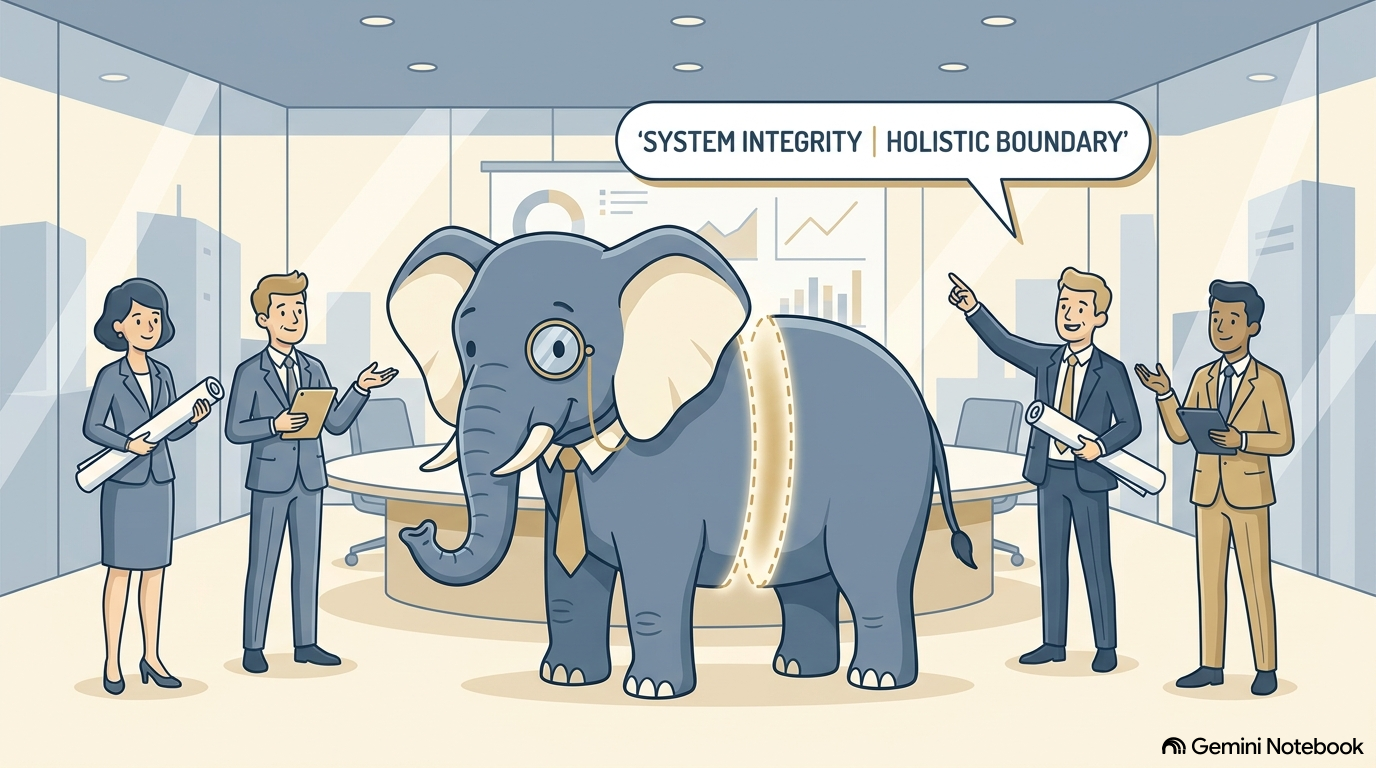
In his 1990 book The Fifth Discipline, Peter Senge set out eleven "laws" of systems thinking. Law number ten is the one I come back to most: dividing an elephant in half does not produce two small elephants.
His point was simple. "Living systems have integrity. Their character depends on the whole." Organisations are the same. What makes them work isn't only the pieces. It's the connections between them: the informal conversations, the handoffs, the person who knows who to call when something doesn't fit the process. Draw a line through the middle and you don't get two smaller versions of what you had. You get two halves that no longer know how to be whole.
Senge also borrowed an old fable to make the point: blind men each touching a different part of an elephant, each certain they know what the animal is. The trunk feels like a snake, the leg like a tree. Every one of them is partly right, and none of them can see the elephant.
That's most leadership teams I meet. Not for lack of ability. As Senge put it, organisations are designed in ways that keep people from seeing the important interactions.
Three things I'd take from this.
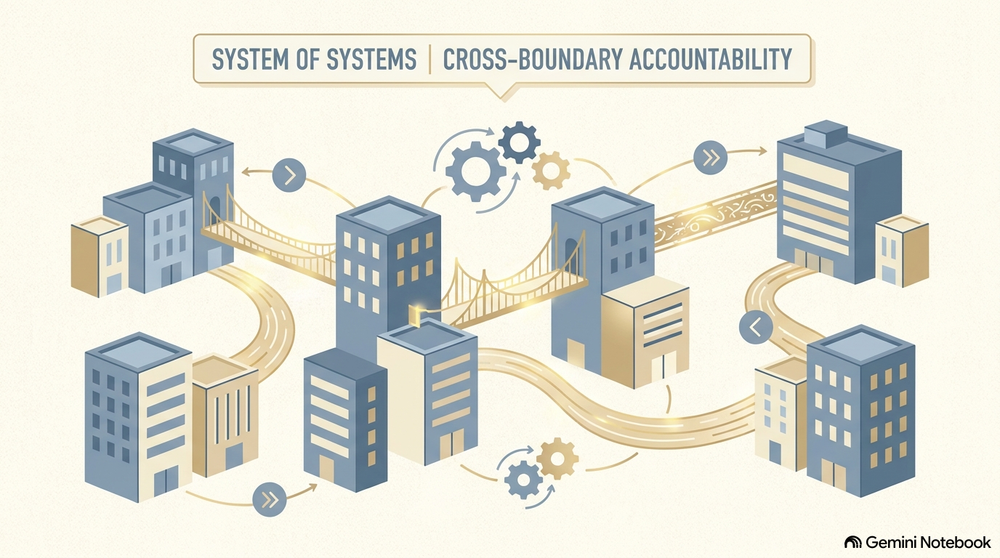
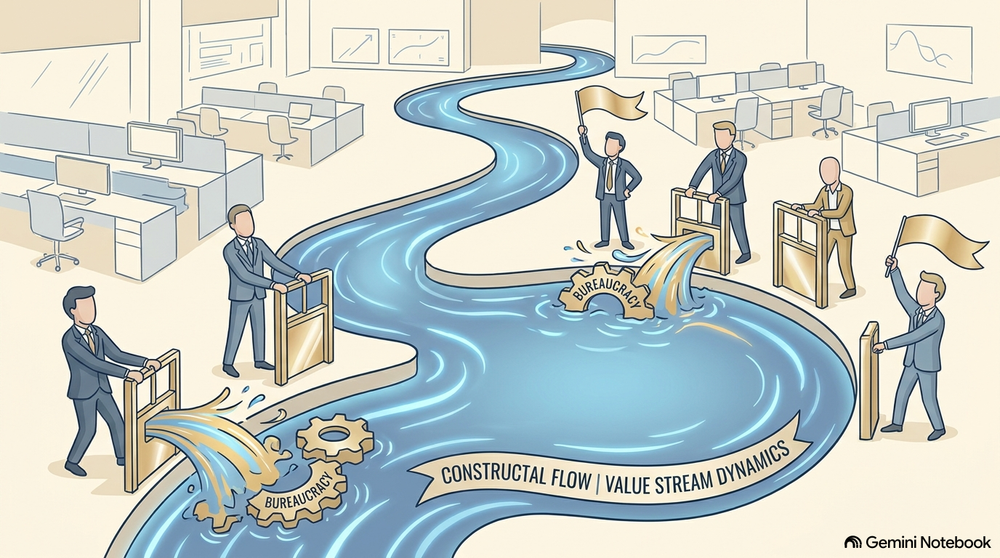
First, before you split anything, map what flows between the parts. Not just the org chart, but the decisions, information and relationships that cross it. Where does one team rely on another to get its work done? Who fills the gaps nobody has written down? Those dependencies don't disappear when you move a line. They just go out of sight, and then out of mind.
Second, set the boundary around the problem, not around the org chart. Senge calls this the principle of the system boundary: look at the interactions that matter most to the issue at hand, regardless of whose territory they sit in. If the problem is customer wait times, the right frame is the whole journey, even if it crosses four divisions and a vendor.
Third, keep someone looking at the whole elephant. When every leader is measured on their own half, each half will be optimised. The whole won't be. Somebody needs the job, and the authority, to ask whether the pieces still add up to what customers and staff actually need.
This is where it becomes an ethical question as well as a structural one. When a whole gets cut in two, the cost of the missing connections rarely lands on the people who drew the line. It lands on the customer who gets bounced between teams, and on the frontline worker who quietly patches the gap until they burn out. A decision that looks tidy in a board paper can shift real harm onto people who were never in the room.
So here's the test I'd put to any executive team considering a restructure: can you describe what currently flows between the parts you're about to separate, and who will be responsible for keeping it flowing afterwards?
If the answer is "we'll work that out later", you're not about to get two small elephants.
Two questions I'd love your take on:
- What's the most important thing in your organisation that only works because of a connection nobody has formally designed?
- And the last time you restructured, what stopped working that nobody saw coming?
I help leadership teams build a shared picture of where they actually stand, with the dependencies made visible, before they decide what to change.
#SystemsThinking #TheFifthDiscipline #EnterpriseArchitecture #OrganisationalDesign #Accountability #DecisionMaking #Governance #BusinessEthics #Leadership