Here's how most restructures go. Someone draws a new org chart. Boxes move, a few people get new titles, there's a town hall. Six months later, the same work is stuck in the same places. Nobody stopped to ask the simple question first: what actually has to get through this place, and what's getting in the way?
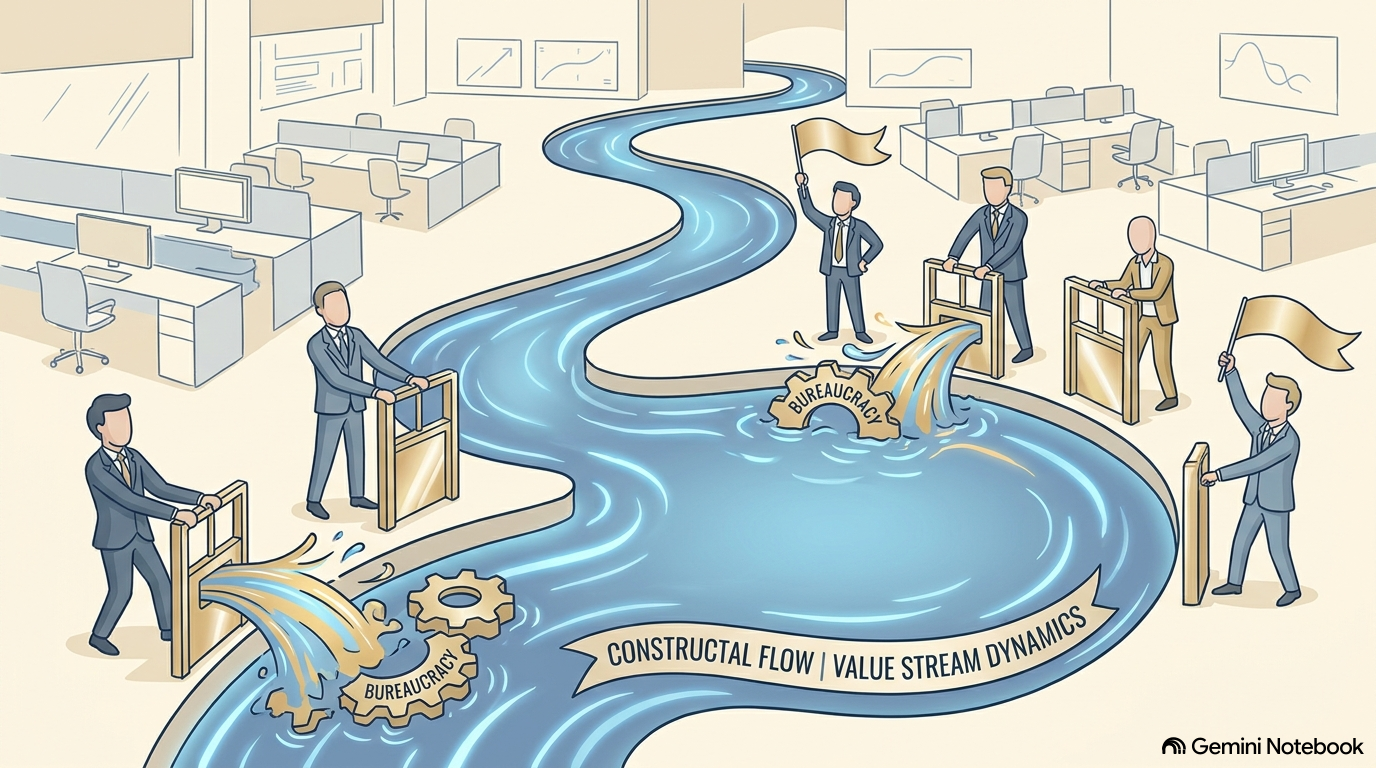
I found the best answer to that question somewhere odd: engineering. Back in 1996, a Duke University professor called Adrian Bejan came up with something he called the Constructal Law. Put simply, anything that carries a flow, like a river, a set of lungs or a road network, keeps reshaping itself over time to make that flow easier. Rivers branch the way they do because it's the easiest way to drain water off the land. Nobody designed that. It just worked better than the alternatives, so it stuck.
Your organisation is exactly the same kind of thing. Work, decisions, money and information all flow through it. And that gives us three pretty practical lessons.
First, your org chart is already out of date. It's a photo of how things flowed on the day someone drew it. The business kept moving. The chart didn't. That's why most people will tell you, off the record, that it's not really how things work around here.
Second, hierarchy isn't the villain. Every river has a big main channel and lots of little streams feeding it. That's fine. Big channels should carry the big stuff, like strategy, capital and serious risk. Little streams should handle the everyday decisions, close to the customer, fast. Things go wrong when every small call has to travel all the way up to the top and back down again. That's not hierarchy working. That's a blocked drain.
Third, if you don't leave room to change, the flow finds its own way. Every extra sign-off "just for visibility" is a small dam. Pile up enough of them and your river turns into a swamp. And when staff build their own spreadsheets and side processes to get around it, they're not being difficult. That's water going around the dam. It's the most useful signal you've got about where your structure is broken.
This is also where capability planning gets more useful. Most capability maps are a list of what the business can do, coloured red, amber or green. Fine as far as it goes. But try reading it as a map of the pipes that get value to your customer. Then the question stops being "which boxes are red?" and becomes "where's the blockage, and which capability is sitting right on it?" That's where the money should go. Not on polishing capabilities that sit on a quiet backwater.
Now for the bit the physics can't tell you.
The Constructal Law explains how things tend to flow. It doesn't tell you what you should be making easier, or for whom. That part's a choice, and it's an ethical one, whether anyone in the room calls it that or not.
It's very easy to make the wrong thing flow faster. Money comes in quicker, but complaints never reach anyone who can fix them. A process gets "streamlined", but the hassle has just been shifted onto customers, frontline staff or suppliers who never got a say. On the dashboard it looks like efficiency. In real life, the pain has just moved onto whoever's least able to push back.
So here's the test I'd put to any restructure or capability investment: what are we making easier, and who's now carrying the hassle we took off our own plate? Good governance doesn't lock everything down. It holds firm on a few things that really matter, like safety, the law and treating people fairly, and lets the rest keep adapting.
Two questions I'd love your take on:
- Where is work already going around your official structure, and what's that telling you?
- And in your last efficiency push, where did the hassle actually end up?
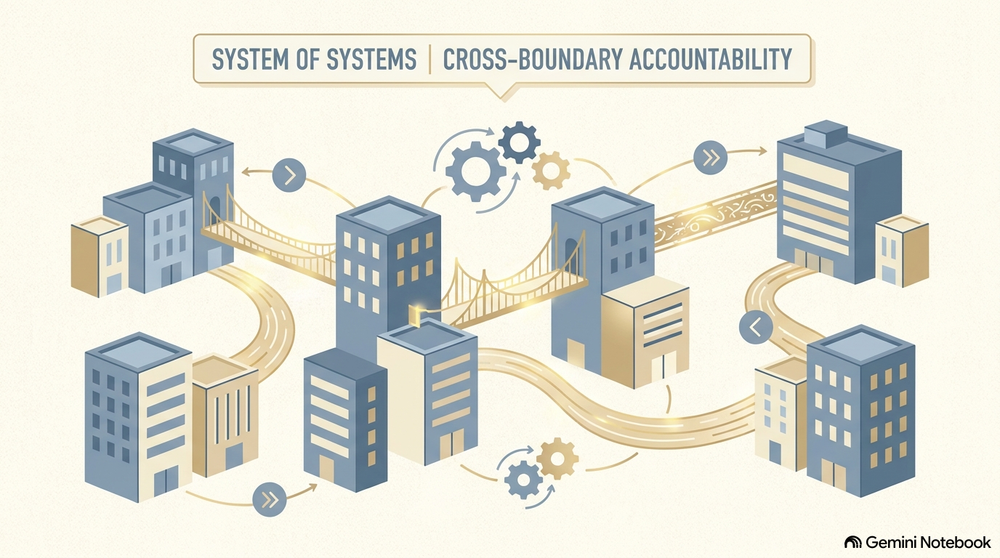
This is the work I do with boards and leadership teams: following how value, decisions and accountability really move through the business, and reshaping things so the right stuff flows more easily, for the right people.
#ConstructalLaw #SystemsThinking #EnterpriseArchitecture #CapabilityBasedPlanning #OrganisationalDesign #BusinessEthics #Leadership