The board paper is sharp. The analysis is tidy and the language confident. Then a director asks a simple question about one of the numbers, and the room goes quiet. Nobody can explain it, though everyone felt sure ten minutes ago.
That gap between how good something feels and how good it is has a name.
In 1999 two Cornell psychologists, Justin Kruger and David Dunning, published a paper with a memorable title: "Unskilled and Unaware of It". They tested students on logic, grammar and humour, then asked them to rate how they'd done. On the logic test, people who scored around the 12th percentile guessed they'd landed around the 62nd.
The point is, the skills you need to do something well are often the same skills you need to notice you're doing it badly.
Interestingly, the famous chart, with a spike in confidence ("Mount Stupid"), a crash ("Valley of Despair") and a slow climb ("Slope of Enlightenment" and "Plateau of Sustainability"), isn't in the paper. However, its silhouette appears to be borrowed from the Gartner Hype Cycle, a business diagram for tracking new technologies (food for thought).
So does AI fix that blind spot, or make it worse?
In 2025 researchers at Aalto University in Finland, led by Robin Welsch, tested it. Around 500 people answered logical reasoning questions from the LSAT, the US law school admission test. Half used ChatGPT. Then everyone estimated how well they'd done.
The AI users did better. In the first study, scores rose by about three points, but they overestimated their performance by about four points. And the classic Dunning-Kruger pattern disappeared. It wasn't just the weaker performers who overrated themselves. Almost everyone did.
Coincidence or correlation: people who rated their own AI literacy highest were the most overconfident. The researchers also noticed most people asked the AI once per question, accepted the answer, and moved on. They'd handed over the thinking, and with it the feeling of having checked.
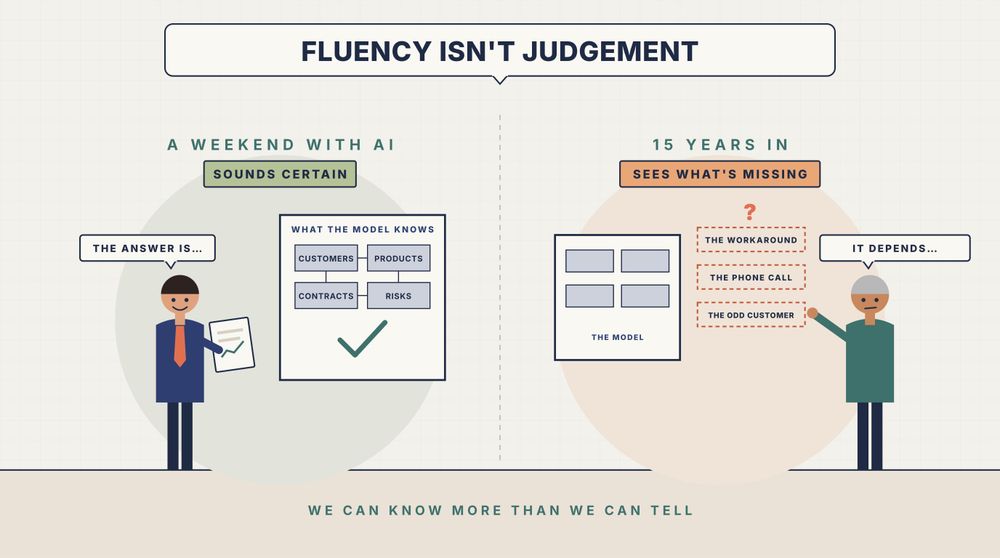
For leadership teams, that's a real shift: AI raises the floor on output. It doesn't raise the floor on judgement. Polished prose strips out the cues, the clumsy sentence or half-finished table, that told us someone was out of their depth. But today, everything now arrives looking finished.
Three habits worth building.
Separate the answer from the assessment. For any AI-assisted paper that informs a decision, ask a second question: how would we know if this is wrong? Ask for sources, assumptions and the weakest point. If nobody can answer, you don't yet know where you stand; you just feel like you do.
Don't treat AI fluency as a proxy for judgement. Being good with the tool and being good at the work are different capabilities. Keep a named owner for every significant decision who can explain the reasoning without the tool open.
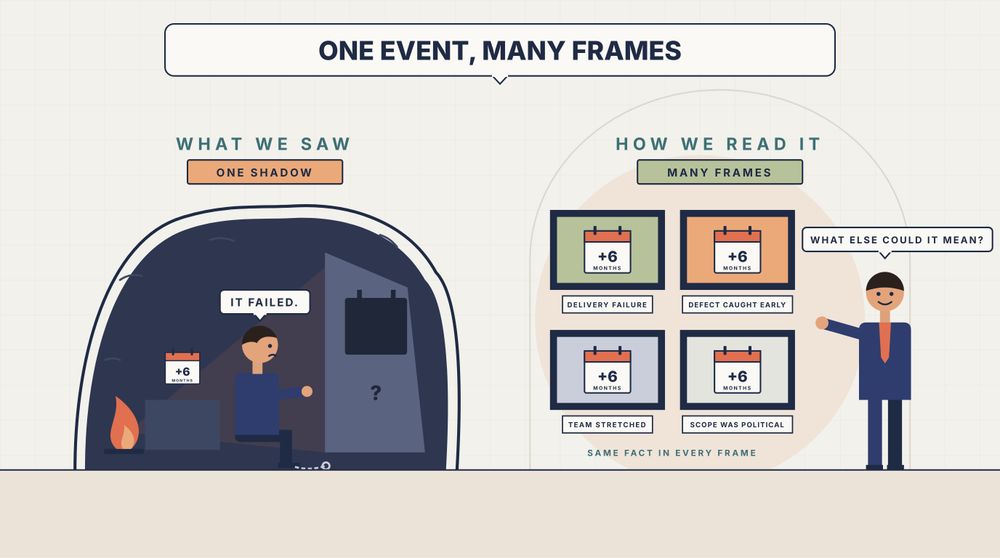
Make the second prompt normal: Ask the tool to argue against its own answer. Ask what would have to be true for the opposite conclusion. Ask how the recommendation holds up if the next two years look different from the last two. One prompt gives you an answer, several give you a view of the range.
On the ethical side, overconfidence is cheap for the person who has it and expensive for whoever lives with the decision: the customer, the employee, the community. Signing off on something you can't explain isn't a technology failure; It's an accountability one.
On your next leadership meeting: pick a recent paper AI helped write. Ask its sponsor to talk through the key number and the main risk, laptop closed. Notice how confident the room is before they start, and after.
A thought to consider: who in your leadership team is still asking, "How do we know?"
#DunningKruger #AIGovernance #DecisionMaking #Metacognition #Leadership #StrategicForesight #Governance #BusinessEthics #CognitiveBias